


Paving slabs are an excellent way to create a stable and attractive pathway in a garden, driveway, or patio. Laying paving slabs on a sand bedding is the key to a durable and solid pathway. Proper subgrade preparation and correct slab placement guarantee a durable and stable pathway that will last for many years. How do you carry out this work correctly? We have some tips.
Why is it worth investing in quality paving slabs?
Choosing the right materials for building pathways is crucial for their functionality, aesthetics, and durability. Investing in quality paving slabs brings numerous benefits, including increased durability, improved aesthetics, and savings in time and costs.
Durability and aesthetics
Paving slabs made from high-quality materials are significantly more durable than their cheaper counterparts. Solid materials, such as concrete or natural stone, are more resistant to weather conditions, the passage of time, and mechanical loads. By investing in higher-quality slabs, you can significantly extend their service life while minimizing costs related to the need for regular replacement or repairs.
Safety in use
One of the main hazards for people using pathways is a slippery surface, especially in rain, snow, or icy conditions. The quality of the paving slab has a direct impact on how quickly water drains from the surface, which can reduce the risk of slipping.
High-quality paving slabs guarantee an even and stable surface, eliminating potential hazards related to tripping or falling. Solid materials such as concrete, natural stone, or composite slabs ensure durability and resistance to deformation, which translates into user safety.
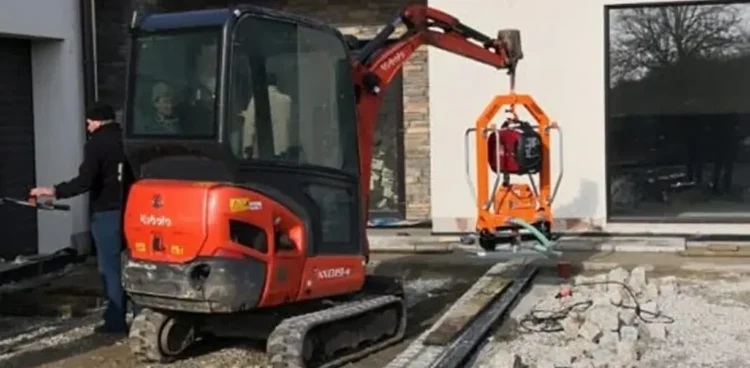
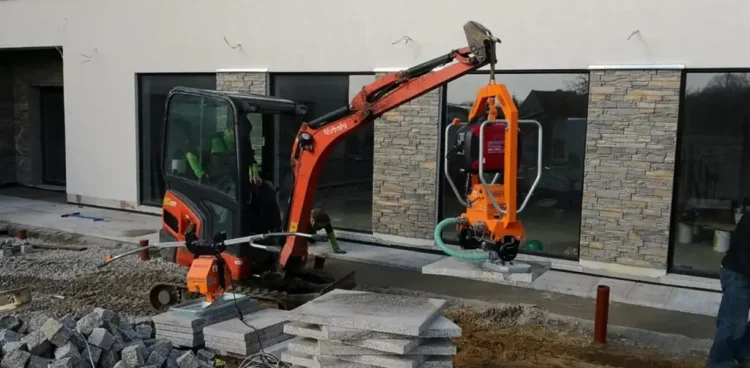
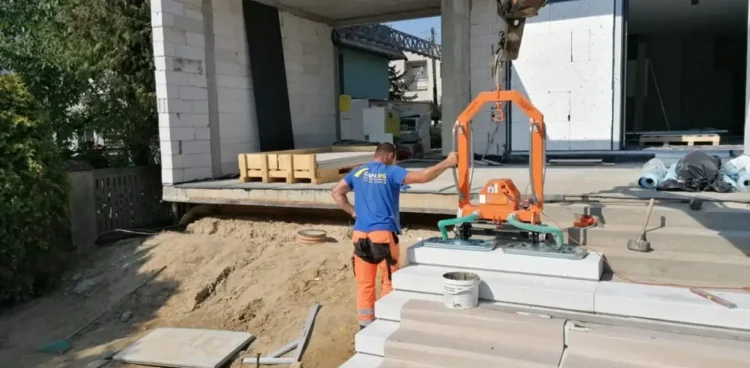
By using the appropriate suction cups and lifters, it’s possible to precisely lay slabs, ensuring an even and safe pathway surface. You can successfully use Catchshift’s paving slab suction cups, concrete slab lifters, and paver block lifters for this purpose. Whether you’re planning to lay 35×35 paving slabs or 50×50 paving slabs, Catchshift’s accessories will help you complete the job quickly and efficiently.
Preparing the subgrade for paving slabs
Preparing the subgrade for paving slabs is a crucial step in building or renovating a pathway. Investing in proper subgrade preparation brings long-term benefits in the form of a safe, attractive, and functional surface that will serve you for many years.
Choosing the right material
When planning the construction or renovation of pathways, one of the key steps is choosing the right subgrade for the paving slabs. A solid, properly prepared subgrade is essential for the durability and stability of the entire structure. What factors influence the choice of the right material?
Analysis of ground conditions: The first step is to analyze the ground conditions at the construction site. You need to examine the type of soil, its load-bearing capacity, and any tendency to settle. Based on this information, you can select the appropriate subgrade construction technology, taking into account the reinforcement of soft soils or ground stabilization.
Choosing the right technology: Depending on ground conditions and expected loads, there are several technologies for preparing the subgrade for paving slabs. This may include mechanical soil compaction, the use of geosynthetic layers, or soil stabilizers. The choice of the appropriate technology should be carefully considered to guarantee the durability and stability of the pathway.
Step by step: preparing the ground
During the construction or renovation of a pathway, one of the key elements is proper preparation of the subgrade on which the paving slabs will be laid. The first step in preparing the subgrade is removing the old surface, if one exists. Next, the subgrade should be compacted using vibrating machines to achieve a stable, compact base that will prevent the surface from settling in the future.
The next step is marking out the level at which the paving slabs will be laid. It’s important for the surface to be even and level, which ensures the aesthetics and functionality of the pathway and makes installing the slabs easier.
To further reinforce the subgrade and prevent the surface from settling, it’s recommended to apply a stabilizing layer, for example made of crushed aggregate. This layer provides better load-bearing capacity for the subgrade and improves water drainage, which contributes to the durability of the pathway.
The process of laying paving slabs
In the process of laying paving slabs, careful planning of the area and subgrade preparation are important. Choosing the right paving slabs will also be essential. Once the foundation is ready, you can proceed with actually laying the paving slabs.
Tools and materials needed for the job
Before you start laying the slabs, you need to properly plan the pathway route and accurately measure the area you want to cover. Then prepare all the necessary tools and materials, including:
- Tools
- Rubber mallet: Essential for gently tapping the slabs to settle them precisely into place.
- Tape measure: Necessary for accurately measuring the area and properly positioning the slabs.
- Marking string: Used for marking straight lines and angles when laying the slabs.
- Mattock or shovel: For preparing the subgrade by removing excess soil, stones, or roots.
- Spirit level: To make sure the slabs are laid evenly and level.
- Transport cart, e.g. Trolly from Catchshift: If you’re working with large, heavy slabs, a cart will make moving them easier.
- Suction cups: Concrete slab suction cups allow for safe lifting and moving of paving slabs. Suction cups make it possible to lay 35×35 paving slabs as well as larger formats.
- Lifters: Paving lifters, including curb lifters, are designed to provide a stable grip on slabs and curbs and precise placement in position. The paving slab lifter allows you to precisely position a slab in the chosen spot and adjust its placement with millimeter accuracy.
- Materials
- Paving slabs: Choose slabs of the appropriate size and style that will suit your outdoor space.
- Stabilizing underlay: If the ground is prone to settling, using a stabilizing underlay will help keep the slabs in place.
- Sand or aggregate: To create a solid base under the slabs.
- Joint-filling material: For example, sand or aggregate, which will be placed between the slabs after they are laid.
Step-by-step instructions
Laying paving slabs is an excellent way to improve the aesthetics and functionality of your outdoor space. If you’ve already prepared the ground and chosen your paving slabs, plan the pattern in which you want to lay them. You can choose a simple pattern with straight lines or a more complex pattern with varied shapes and colors. Use string to mark out the layout lines. On the leveled ground, spread a layer of sand or aggregate about 5-7 centimeters thick. Use a board or a vibrating plate to compact the subgrade evenly. Check the level using a spirit level to make sure the foundation is even and stable.
Start laying the slabs from one edge, paying attention to the marked layout lines. Use a rubber mallet to gently tap each slab, fitting it into the subgrade. Make sure each slab is laid evenly and level. Once all the slabs are laid, fill the gaps between them with sand or aggregate. Then use a broom to evenly spread the material into the joints. During this step, you can also apply special sealing materials to reinforce the connections between the slabs.
After finishing laying the slabs, thoroughly clean the surface of any remaining debris. Regularly maintain the surface by removing leaves, clumps of soil, and other debris. By taking care of the surface, you’ll extend its durability and appearance.
Summary
Laying paving slabs is not only a practical way to improve the look of your garden, but also a way to create a durable and functional outdoor space. A variety of accessories are available today, such as vacuum lifters and vacuum suction cups for slabs, which make this process easier and more efficient — and one of the most innovative brands in this field is Catchshift. A suction cup and lifter for paving slabs are essential tools for anyone involved in surface installation. If you’re looking for modern solutions, it’s worth trusting Catchshift and enjoying perfectly laid paving slabs for many years to come.